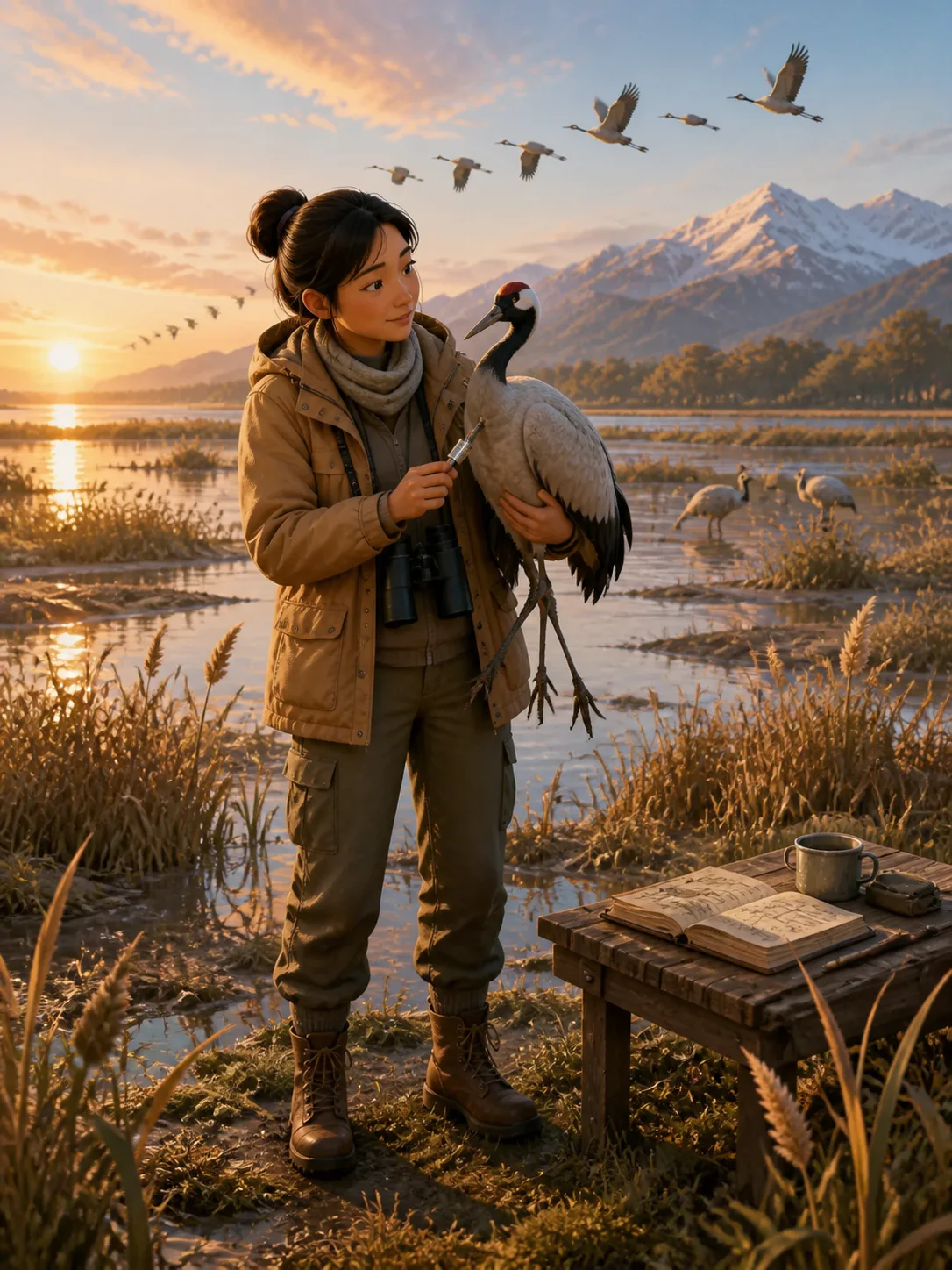
Hana
Northern breeding grounds- Strategy
- Reciprocal: protects first, then responds to the previous season
- Fear
- Paying protection costs while others keep developing
- First move
- Protect
- Response rule
- Next season, mirrors your observed previous move
Migratory birds need wetlands in the other three regions as well as your own estuary. Protection carries a cost each season, while development offers an immediate gain. Read how the other regions respond, move through seven seasons, and use your first three seasons to choose a treaty. A protective action may be reported incorrectly along the way. Test what can keep cooperation going after a misunderstanding.
Iterated prisoner's dilemma: learn the shadow of the future, reciprocity, reputation, and limited forgiveness under noisy observation.

Your path through the game
Choose to protect wetland or develop the coast in each of seven seasons, then inspect the other regions’ moves and the shared history. After season three, choose joint monitoring, an apology with one-time forgiveness, or cost compensation. Follow birds, prosperity, and trust through an episode in which protection can be reported as development.
Read each region’s response pattern and choose protection or development.
Use the first three seasons to choose one treaty.
Examine responses to misunderstanding and the final birds, prosperity, and trust.
One region mirrors your previous move, another watches the wider group, and a third forgives once. Anticipate these different responses and see cooperation spread. Try another response to misunderstanding on a new playthrough, and discover how the same protective choice can lead to a different relationship.
This story explores the iterated prisoner’s dilemma: today’s gain matters alongside a partner’s response and the value of future cooperation. Across seven seasons, examine how decision histories, mistaken observations, forgiveness, and compensation affect whether cooperation continues.
How did the other regions respond to your previous choice? When a misunderstanding occurred, what changed when a region reacted immediately or allowed one mistake? Use the history to explain whether your treaty addressed inaccurate information, the cost of protection, or both.
The first move and response rule on each portrait are the rulebook for predicting next season—not decoration.